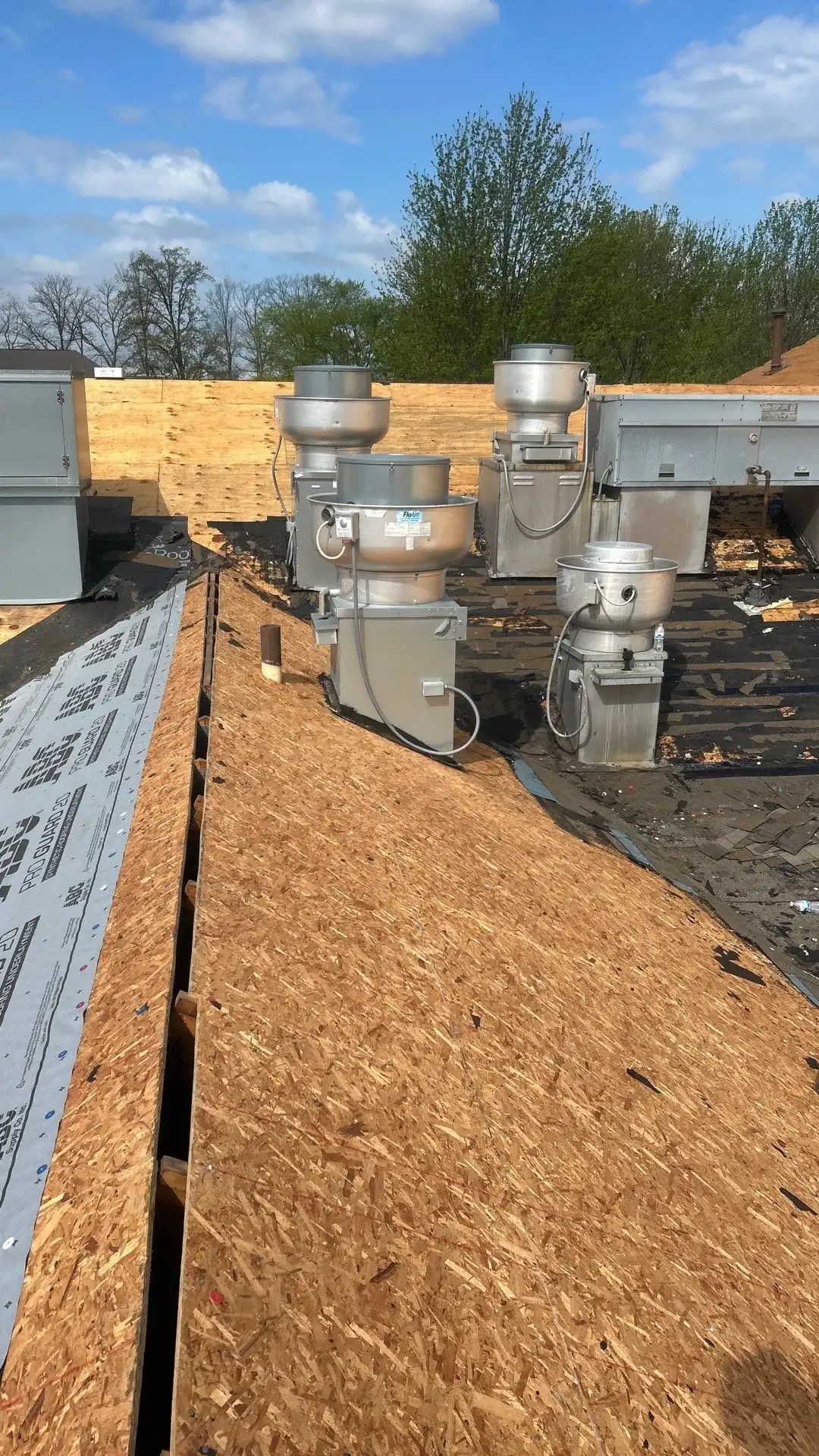
Minimizing operational disruption during industrial roof work
For most industrial facilities, the operations beneath the roof cannot simply stop for roof work, so a central concern of any industrial roofing project in Hammond is doing the work without disrupting the business below. Planning for this from the start is what separates a smooth project from a costly one.
Phasing the work in sections
One of the most effective ways to limit disruption is phasing the work, addressing the large roof in sections over a planned schedule rather than all at once. This keeps most of the facility operating while one area is worked on. For a facility, phasing a roof project allows the operation to continue beneath the unaffected portions, reducing the impact on production, storage, or distribution. A contractor experienced in industrial work plans the phasing around the building's layout and the facility's needs, sequencing the sections so the roof gets completed over time while the business keeps running through the project.
Scheduling around the operation
Scheduling roof work around the facility's operation limits disruption, whether that means working during slower periods, off shifts, or windows when affected areas are not in heavy use. The schedule is planned to fit the business. For a Lake County facility, scheduling the work thoughtfully, in coordination with the facility's managers, reduces the impact on the operation, since the timing can often be arranged to avoid the busiest periods or to work over areas when they are least active. This coordination is part of why industrial roofing requires a contractor who plans around the facility rather than imposing a schedule that ignores how the building is used.
Protecting the interior and contents
During roof work, protecting the interior, the equipment, the inventory, and the people below, is essential, since debris, water, or disruption from above can affect the operation. The work is managed to keep the interior protected. For a Hammond facility, protecting what lies beneath the roof during the project matters, since the contents and operations are valuable and vulnerable to anything that comes through an opened roof. A professional crew manages the work to keep the interior protected, sequencing tear off and installation so the roof is never left exposed over active areas in a way that risks the contents below.
Communication with facility managers
Clear communication between the roofing crew and the facility's managers keeps a project running smoothly, since the facility knows what is happening, when, and where, and can plan its operations accordingly. Coordination prevents surprises. For a facility, ongoing communication during the project, about the schedule, the areas being worked on, and any access needs, allows the operation to adapt and avoid conflicts. This communication is a practical part of minimizing disruption, since a facility that knows the plan can work around it, while one left in the dark faces avoidable interruptions when the roof work intersects with the operation.
Managing access and safety
Industrial roof work requires managing access and safety, keeping the work area controlled, protecting workers and facility staff, and coordinating any rooftop access the operation needs during the project. Safety and access are managed throughout. For a Lake County facility, proper management of access and safety during the project protects everyone involved and keeps the work from interfering with the operation more than necessary. A contractor experienced in industrial settings handles this coordination, managing the work area and any required access so the project proceeds safely alongside the facility's ongoing activity rather than creating hazards or conflicts.
Planning the whole project upfront
Limiting disruption ultimately comes down to planning the whole project upfront, the phasing, the schedule, the protection, and the coordination, so the work is organized around the facility from the beginning rather than figured out as it goes. Planning prevents most disruption. For a Hammond facility, a well planned industrial roof project anticipates how the work will affect the operation and arranges everything to minimize that impact, which is why the planning matters as much as the roofing itself on a large active facility where unplanned disruption is costly.
Keeping operations running through the project
Minimizing disruption during industrial roof work, through phasing, scheduling, interior protection, communication, access management, and upfront planning, is essential for a facility that cannot stop for its roof. For a facility owner, working with a contractor who plans the project around the operation is what keeps the business running while the roof gets done, turning a potentially disruptive project into a managed one.
Planning ahead for an industrial roof's eventual needs serves a facility well, since knowing roughly when restoration or replacement will be required allows the owner to budget and plan rather than face a sudden large expense. For a Lake County facility, tracking the roof's condition over time through regular inspection turns major roof decisions into planned investments, which is far easier to manage than reacting to a failure, and it gives the operation the predictability that a large, expensive asset like an industrial roof deserves.
The conditions a facility's roof faces, the weather, the rooftop activity, and the demands of the operation below, all shape how the roof ages and what it needs over time. A roof in a demanding setting requires more attention than one in mild conditions, which is why an approach matched to the actual conditions serves a large facility better than a generic schedule. Hammond Commercial Roofing accounts for the real conditions of your Hammond facility when assessing and maintaining your roof, so the care fits the building.
The conditions a facility's roof faces, the weather, the rooftop activity, and the demands of the operation below, all shape how the roof ages and what it needs over time. A roof in a demanding setting requires more attention than one in mild conditions, which is why an approach matched to the actual conditions serves a large facility better than a generic schedule. Hammond Commercial Roofing accounts for the real conditions of your Hammond facility when assessing and maintaining your roof, so the care fits the building.
Plan a roof project around your operation
Hammond Commercial Roofing plans Hammond industrial roof projects around your operation, phasing and scheduling the work to keep your facility running. Call (765) 676-3491 to plan a project that protects your operation while we handle the roof. Keeping the business running through the work is part of doing industrial roofing right.